About Us
We are a congregation of the Presbyterian Church (U.S.A.)
First Presbyterian Church Celebrates the Love and Grace of God by:
Growing through Bible study, prayer, and worship,
Reaching out to serve,
Accepting questions,
Connecting people to Jesus Christ, one another, and the world, and
Embracing all.
We gratefully respond as a part of the holy universal Church: Thanks be to God!
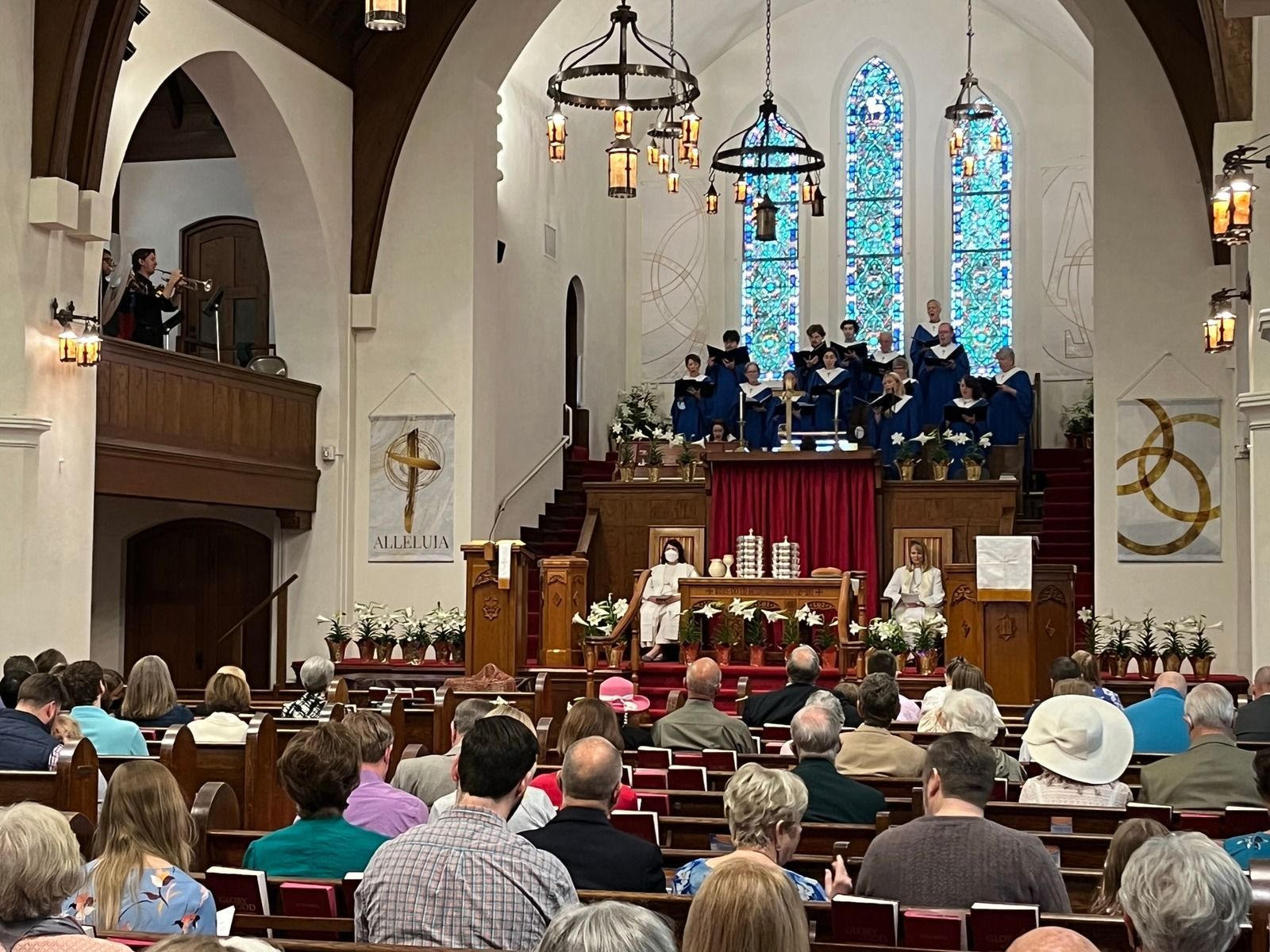
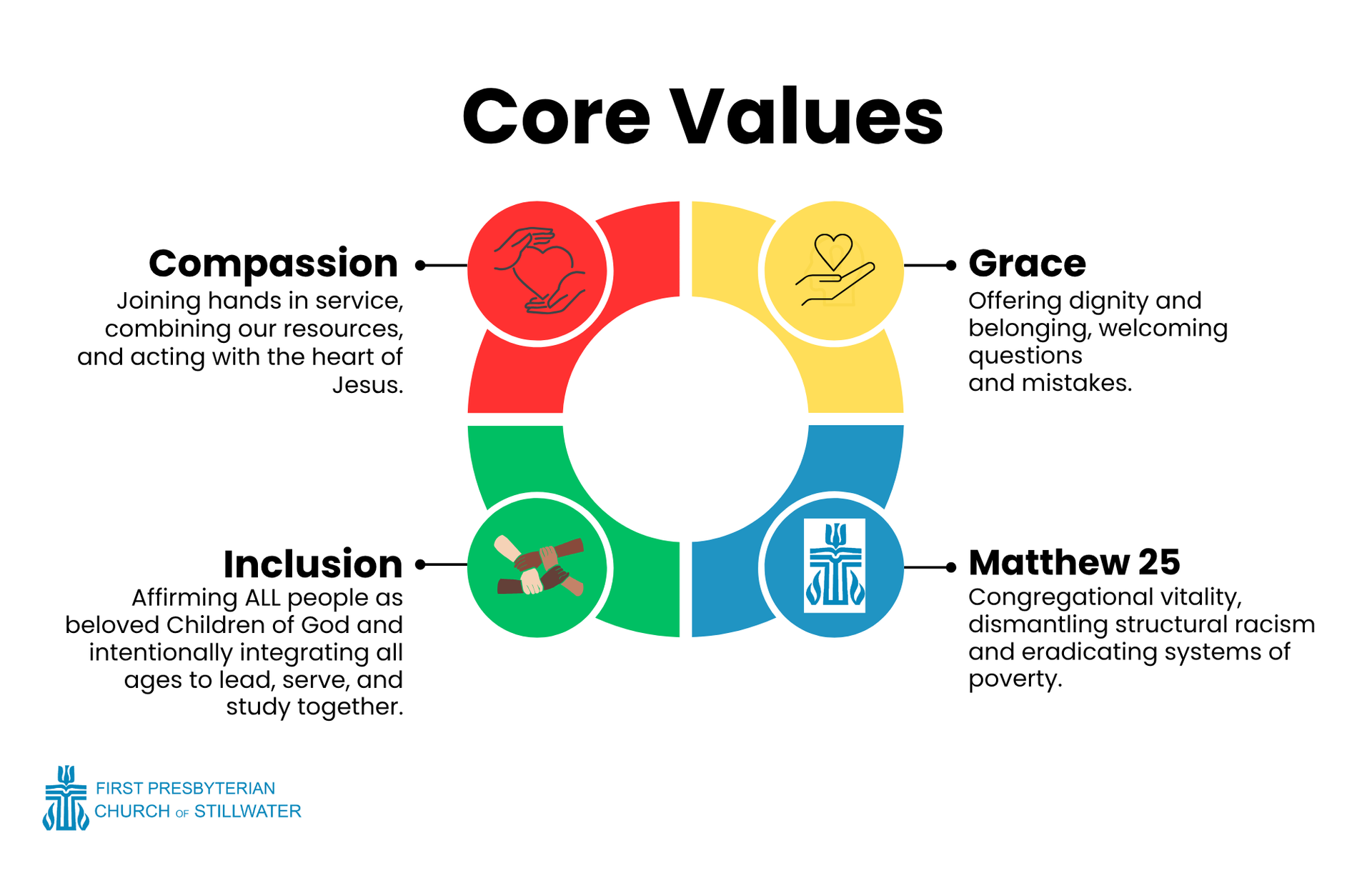
After a season of visioning in 2023, our congregation and session chose four core values in 2024 to express our identity as we seek to grow in faith and engagement in the community.
Our Initiatives
Matthew 25
What does being a Matthew 25 congregation mean?
Matthew 25 is based on teachings in Matthew 25:31-46. This passage calls for congregations to engage in three core pillars: building congregational vitality, dismantling structural racism, and eradicating systemic poverty.
Neurodiversity
What is Team Neurodiversity?
Team Neurodiversity was formed in the fall of 2024 to expand inclusivity and understanding of neurodiversity in our church through accommodations and education, so that all people can experience God’s support, love, and grace together. The church setting can often be overwhelming and cause sensory overload for neurodivergent individuals. Neurodivergent conditions include autism, ADHD, OCD, Tourette’s Syndrome, Sensory Processing Disorder, Fragile X Syndrome and others.
Team Neurodiversity currently has four major initiatives in progress:
- A sensory room geared toward children along the south first-floor hallway
- A space geared toward youth and adults in the Worship Center
- An intergenerational liturgical library housed in the narthex that will provide neuro-affirming tools for individuals of all ages to utilize throughout the worship service to regulate
- Congregational education pieces to be shared regularly on various aspects of neurodiversity.
We hope that these efforts, along with a continued focus on providing intentional inclusivity and acceptance of neurodivergent individuals, will create a more welcoming and supportive church environment for neurodivergent families in our community.
What is a sensory Room?
A sensory room is a carefully designed space that minimizes overwhelming sensory input, offering a calm and controlled environment for individuals with sensory sensitivities or those who need a break from sensory overload. Sensory rooms are designed to help individuals manage stress, anxiety, and overstimulation by providing a safe and predictable environment. They cater to individuals with sensory processing differences, such as those with autism, ADHD, or other neurodevelopmental conditions. Sensory rooms can be used by anyone who benefits from a calmer, more organized setting. They are not meant to be playrooms for the general public, but rather a controlled environment that can improve focus and concentration by reducing distractions and can also help individuals work through emotions and develop coping mechanisms.
How can I learn more about neurodiversity?
In an effort to educate our congregation on what neurodiversity is, we have included a Neurodiversity word of the month. This is to encourage proper terminology and phraseology, debunk outdated and harmful views, and prepare our congregation to be open-hearted, educated, and understanding as we hope to welcome more neurodivergent individuals and families into our church. Here are some of our past words and links to learn more about each one: ADHD, Autism, Fragile X Syndrome, Sensory Processing Disorder, OCD, Tourette Syndrome, Anxiety, PDA, Dyslexia, Down Syndrome and Dyscalculia.
FPC's Sensory Spaces
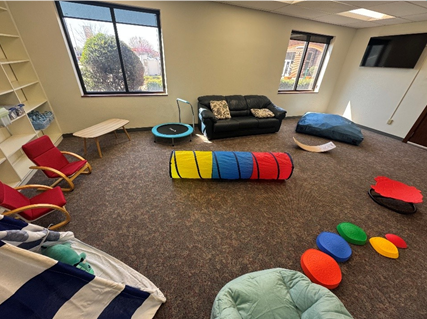
The sensory room above, geared toward children and those with higher support needs, is located next to the restrooms in the south first-floor hallway. A low-sensory entrance is accessible from Duncan Street, on the southeast side of the main building, and the sensory room is directly opposite that entrance.
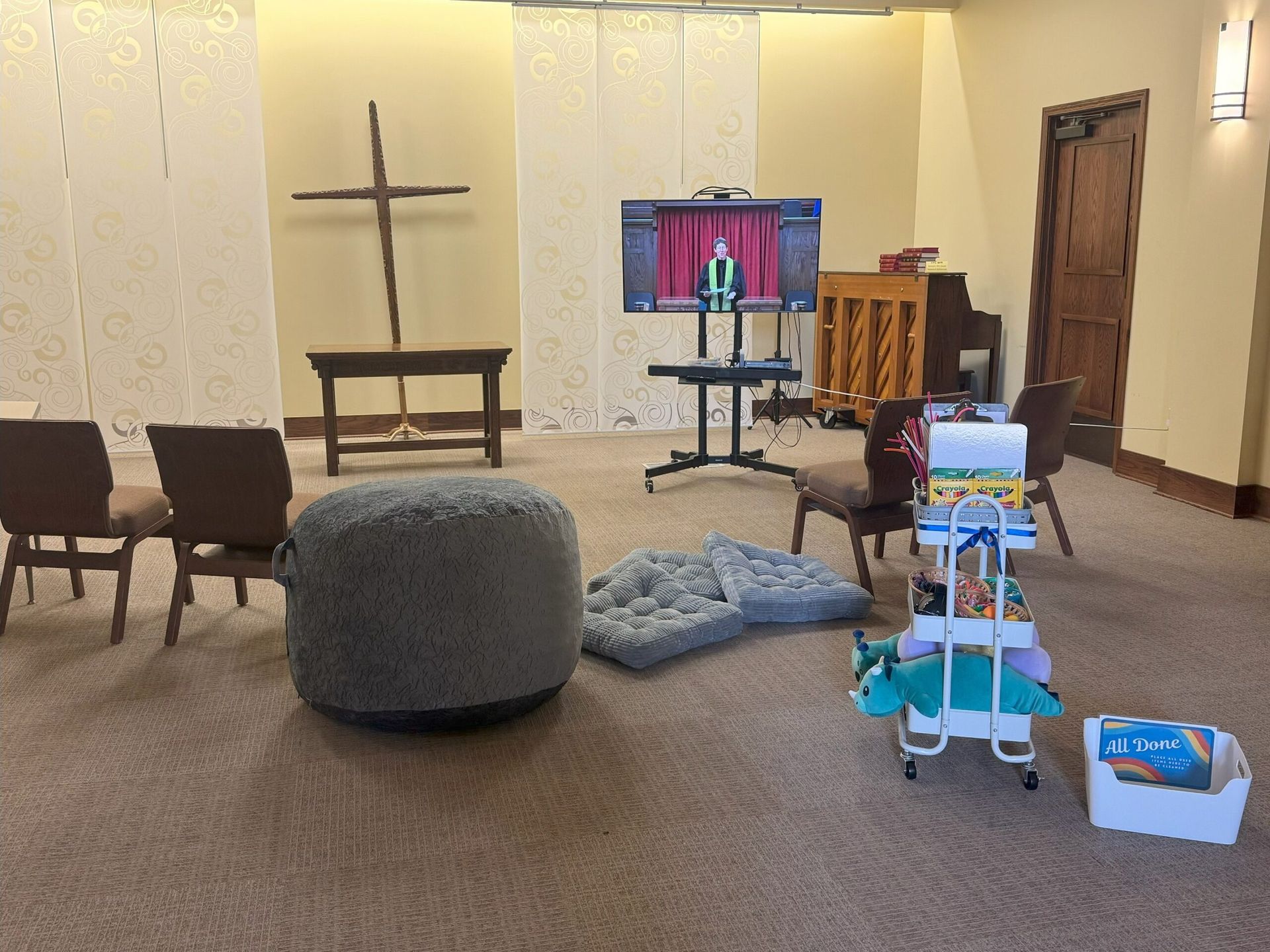
Our second sensory room, geared toward teens, adults, and those with lower support needs, is located in the Worship Center.
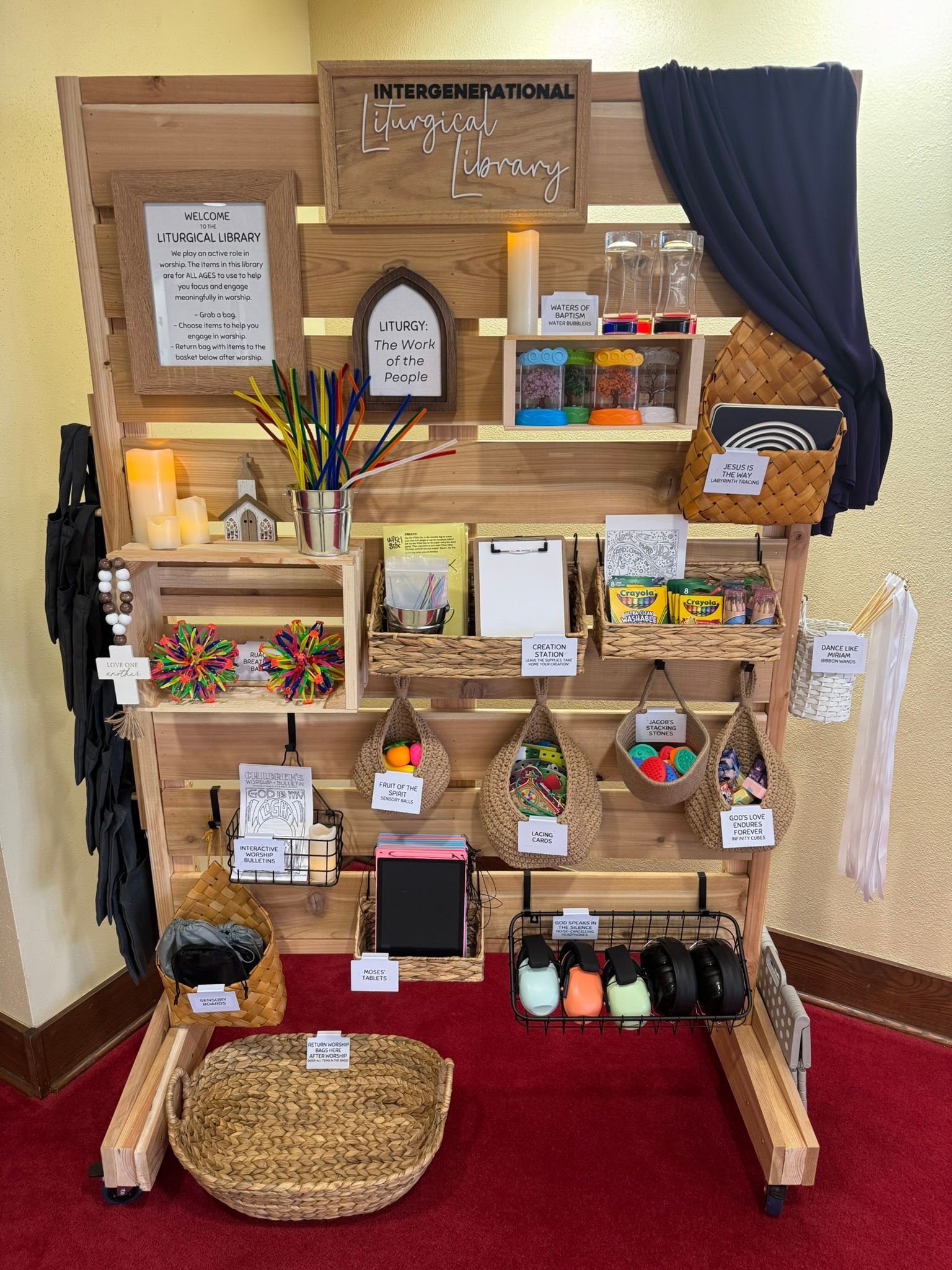
The liturgical library makes space for a variety of responses in worship, acknowledging that our brains and bodies all have different needs when it comes to focusing, learning, listening and worshiping.
The library is filled with neuro-affirming items to engage people of all ages in worship. The items aren’t toys; rather, they are tools for regulating, for sensory input, and for worship engagement.
Grab a bag and add items that you’d like to use to engage in worship. After worship, return your bag to the basket at the base of the library (keep any paper/creations you’ve made but return other materials with the bag).
FPC Stillwater's History
Crash Course in FPC Stillwater's History
A slideshow presentation of the history of FPC-Stillwater from its founding in the 1890’s to present-day. This presentation incorporates historical materials and photos pull from the church archives and the first showing took place on Sunday, November 3, 2024 as part of the From Strength To Strength Capital Campaign Celebration Luncheon. The slideshow can be viewed by clicking on the orange button.
Early History
In April 1890, First Presbyterian Church was established in Stillwater, Oklahoma Territory, with the arrival of Rev. Simon P. Myers, a missionary sent by the Presbyterian Board of Home Missions. He preached his first sermon in the community on the evening of April 13 in the upstairs room of the Swope building, located at present-day 824 South Main Street. The building, shared by various churches at the time, was located two doors down from a saloon. Click on the orange button below to read Clarence S. Bassler’s full history of the early years of Stillwater FPC. Originally published on May 23, 1963, this history was edited and reprinted by Mary Woods on November 3, 2022.
"Art Glass" Windows
As September 2024 and the 100th anniversary of this Sanctuary’s dedication approach, we wanted to honor the history and legacy of our beautiful, stained glass windows. Stained glass windows were originally used to educate people who could not read and became a crucial part of the church architecture, enhancing the beauty and meaning of the worship space. One of the first discoveries in this project was that the windows here were made in St. Louis, MO, by the Jacoby Art Glass Company and technically aren’t stained glass windows at all. Rather, they are “art glass,” which means the glass was first painted and then fired.
Following the construction of the main Sanctuary building, there were no funds left for windows. Enter the Ladies' Aide who raised $4,750 through donations for memorialized windows. The windows were installed in the summer of 1924, and the current Sanctuary was dedicated on September 14, 1924.
Linked below are the dedication and memorial information for all of the Sanctuary ‘art glass’ windows.
Written History Book
Additional written history of First Presbyterian Church of Stillwater may be found in “A History of the First Presbyterian Church, Stillwater, Oklahoma’ by Dr. Eric I. Williams. Published in 1991, this book begins with the founding of the early FPC congregation in 1889 and covers both congregational life and facility history over the next 100 years. Copies of Dr. Williams’ book may be checked out of the FPC library or you may ask after a copy in the Church Office.
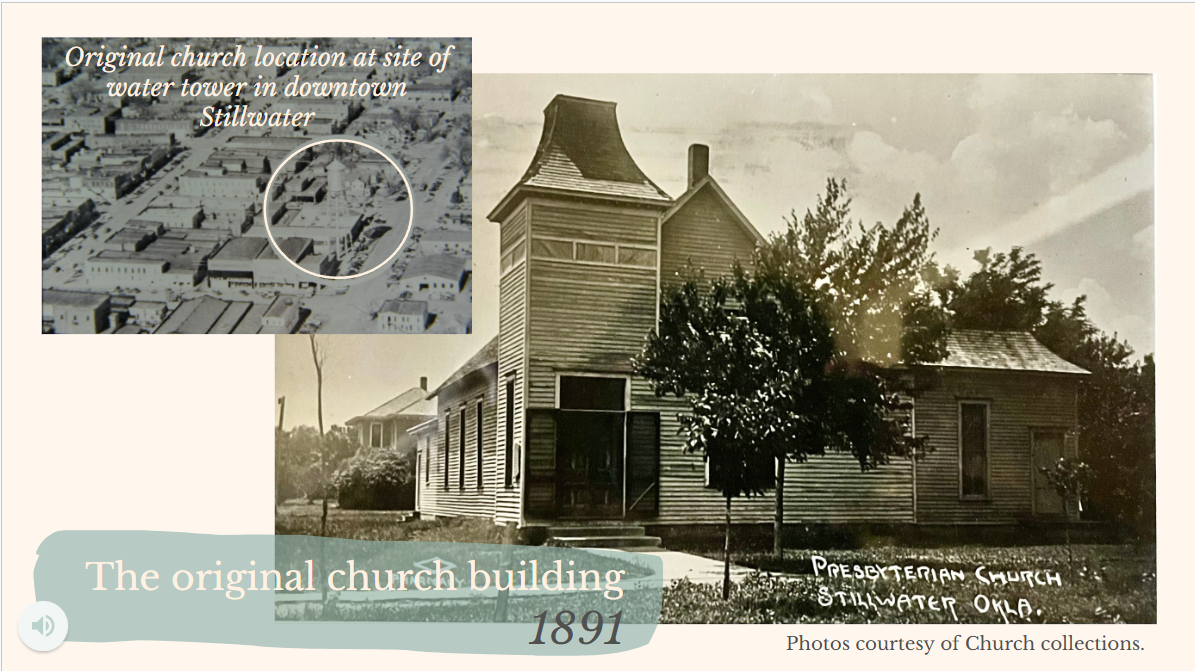
The original church building in 1891
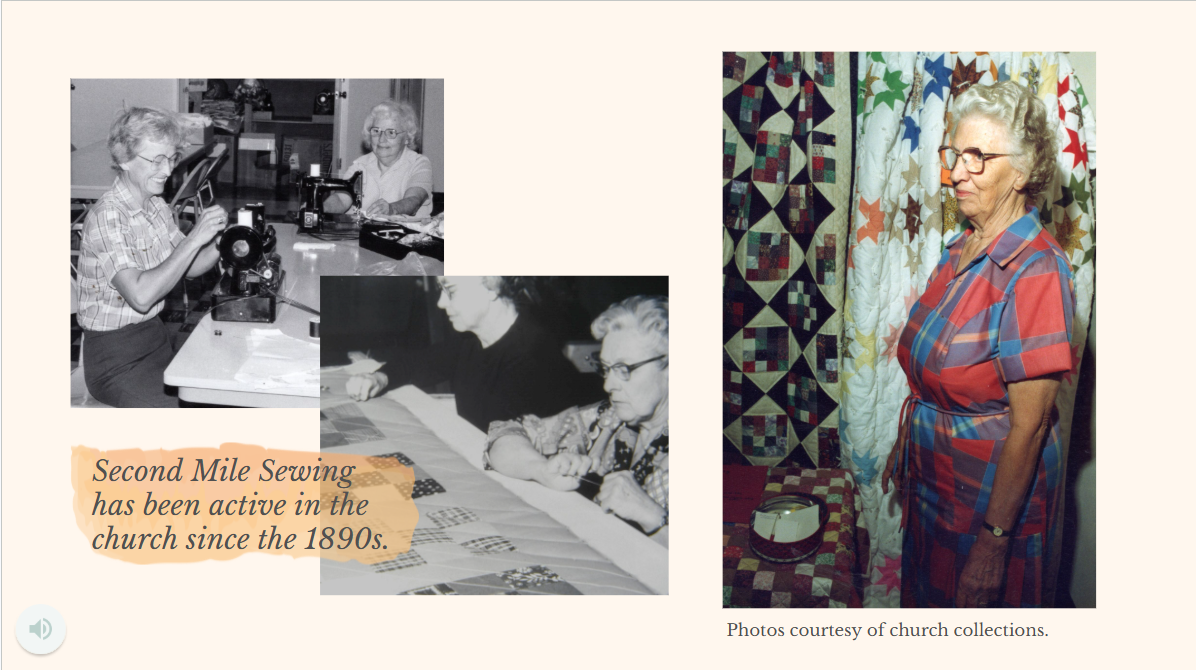
Second Mile Sewing has been active since the 1890s
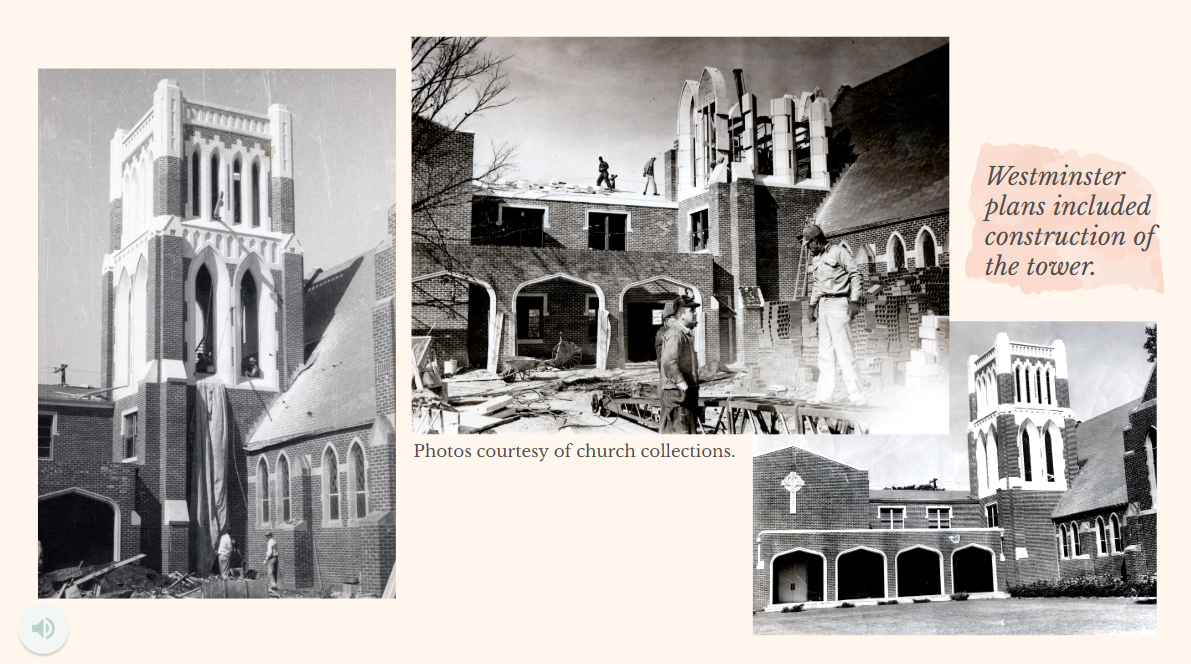
The tower being built in 1951
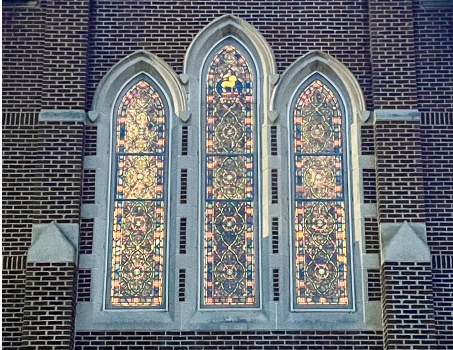
The north art glass windows